For many Hoosiers, college feels out of reach—too expensive, too far, or too rigid to fit real life. Ivy Tech Community College Indiana changes that equation. With 40+ campuses across the state and robust online offerings, it’s not just accessible—it’s built for the way people in Indiana actually live and work.
This isn’t a fallback option. It’s a strategic launchpad.
Whether you’re a high school graduate, a working adult, or someone looking to pivot careers, Ivy Tech meets you where you are. It’s the largest community college system in Indiana, serving over 100,000 students annually, with programs designed in partnership with local employers. The result? Graduates who aren’t just educated—they’re employable.
Let’s explore how Ivy Tech is redefining what community college can do.
Affordable Education with Real-World Value
College costs continue to rise, but Ivy Tech keeps tuition low without sacrificing outcomes. For the 2023–2024 academic year, in-state tuition averages $180 per credit hour for associate degrees—less than half the cost of most public four-year schools in Indiana.
But cost is only part of the equation. The real value is in the return.
A student earning an Associate in Applied Science (AAS) in Nursing, for example, can graduate with under $10,000 in total costs and qualify for jobs earning $60,000+ annually in Indiana. That’s a faster, leaner path to financial stability.
Compare that to the average four-year graduate with $30,000+ in student debt and no guaranteed job at the end. Ivy Tech flips the script: less risk, faster results.
And it’s not just about saving money. It’s about earning sooner.
Career-Focused Programs Aligned with Indiana’s Job Market
Ivy Tech doesn’t guess what employers need. It collaborates with them.
Through its Corporate College division, Ivy Tech partners with companies like Eli Lilly, Cummins, and Amazon to design curriculum that matches real workforce demands. These partnerships mean students gain skills that are immediately applicable—and in demand.
Here are five high-impact programs with strong job placement records:
- Nursing (ADN)
- - Graduates qualify for RN licensure
- - 89% pass rate on NCLEX (above national average)
- - Clinical rotations at major hospitals like IU Health and Ascension
- Advanced Manufacturing & Mechatronics
- - Focus on robotics, automation, PLCs
- - Certifications from Siemens and FANUC included
- - 92% job placement within six months
- Information Technology (Cybersecurity & Networking)
- - Prepares for CompTIA, Cisco, and EC-Council certifications
- - Aligns with Indiana’s growing tech sector
- - Offers virtual labs and 24/7 cloud access
- Automotive Technology
- - Factory training partnerships with GM, Ford, and Toyota
- - Students work on late-model vehicles in climate-controlled labs
- - Graduates often hired before completing the program
- Early Childhood Development
- - Meets Indiana’s new licensing requirements
- - Includes 160+ hours of field experience
- - Pathway to roles in Head Start, public schools, and private centers
These aren’t theoretical tracks. They’re pipelines to jobs that are hiring now.
Flexible Learning Options for Real Schedules
Life in Indiana doesn’t pause for college. Shift workers, parents, and caregivers need flexibility—and Ivy Tech delivers.
Across its network, students can choose from:
- On-campus classes with evening and weekend options
- Hybrid models combining in-person labs with online theory
- Fully online programs with asynchronous coursework
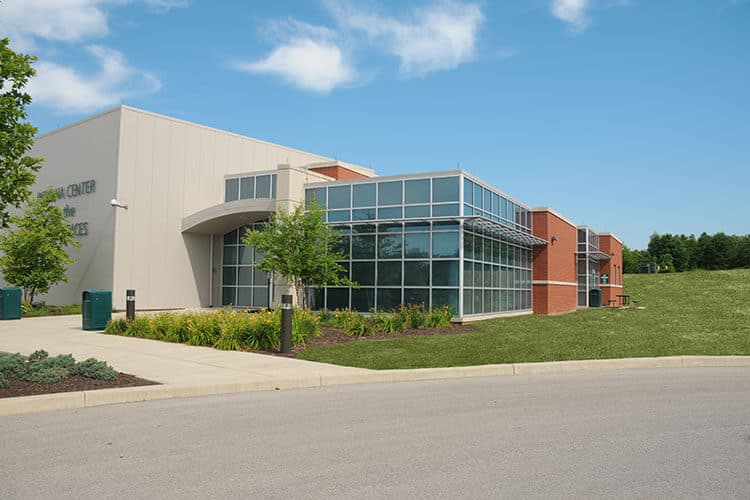
For students in rural areas like Jasper or Portland, online access removes geographic barriers. For those in Indianapolis or Fort Wayne, evening labs in advanced manufacturing or healthcare make it possible to work days and train nights.
One practical tip: If you’re balancing a full-time job, start with one online course to test your workflow. Ivy Tech’s Student Readiness Indicator tool helps predict success in online environments based on time management and tech access—something many students overlook.
Also, many programs use modular scheduling. Instead of 16-week semesters, courses run in 8-week blocks. Finish faster, stay focused, reduce burnout.
Transfer Pathways to Four-Year Degrees
Contrary to outdated myths, community college doesn’t lock you out of a bachelor’s degree—it can accelerate it.
Ivy Tech has guaranteed transfer agreements with over 30 Indiana colleges, including Indiana University, Purdue University, and the University of Southern Indiana. Through programs like Transfer IN, students complete general education and core courses at Ivy Tech, then transfer with junior status—saving thousands.
Common transfer pathways include:
- Computer Science → Purdue or IUPUI
- Business Administration → Indiana State or Butler
- Biology → University of Indianapolis or Valparaiso
- Psychology → IU Bloomington or Ball State
But don’t assume all credits transfer automatically. Mistake #1? Not meeting with an advisor early. Each university has specific course requirements. For example, Purdue may require certain math sequences, while IU prioritizes lab sciences with specific prefixes.
Pro tip: Use the Transfer Credit Portal on Ivy Tech’s website to pre-check course equivalencies. Plan your associate degree with the end goal in mind.
Workforce Training & Short-Term Credentials
Not every career needs a two-year degree. Sometimes, what you need is a certification—fast.
Ivy Tech offers accelerated training programs that take weeks or months, not years. These are ideal for:
- Unemployed or underemployed workers
- Veterans transitioning to civilian jobs
- Employers upskilling teams
Popular short-term options include:
| Program | Duration | Average Cost | Outcome |
|---|---|---|---|
| Certified Nurse Aide (CNA) | 6–8 weeks | $1,200 | $15–18/hr in healthcare settings |
| Commercial Truck Driving (CDL) | 5 weeks | $4,500 | $50,000+ starting at regional carriers |
| HVAC Technician | 12 weeks | $6,000 | High demand in construction & maintenance |
| Phlebotomy Technician | 8 weeks | $1,800 | Jobs in labs, clinics, hospitals |
| IT Support Specialist | 16 weeks | $3,200 | Prepares for CompTIA A+ certification |
Many of these programs qualify for Workforce Ready Grants, which cover tuition for eligible Indiana residents. That means $0 out of pocket—for skills that lead to real paychecks.
Support Services That Keep You on Track
College dropout rates are high—especially at the community level. But Ivy Tech invests in retention.
Students have access to:
- Academic coaching with structured goal planning
- Free tutoring in math, writing, and STEM subjects
- Childcare assistance through campus partnerships
- Mental health counseling via telehealth and in-person visits
- Food pantries at 15+ campuses
One standout: the Back on Track program. If a student stops out due to financial or personal challenges, advisors help them re-enroll, regain financial aid, and pick up where they left off—no reapplication needed.
This kind of support isn’t standard at every institution. At Ivy Tech, it’s built into the model.
Campus Life and Student Engagement
Community college doesn’t have to mean isolation. Ivy Tech fosters connection through:

- Student clubs focused on nursing, business, IT, and more
- Leadership programs like the President’s Student Advisory Council
- Athletics at select campuses (basketball, soccer, esports)
- Community events—job fairs, health screenings, cultural celebrations
At the Columbus campus, for example, students in the engineering program run a robotics competition each spring, judged by engineers from Cummins. At North Central in South Bend, music and theater students perform original productions annually.
These experiences build soft skills, confidence, and professional networks—often overlooked but critical for long-term success.
Realistic Challenges and How to Overcome Them
Ivy Tech isn’t perfect. Some students struggle with:
- Self-directed learning in online courses
- Balancing work, family, and coursework
- Navigating financial aid complexities
Solutions?
- Use campus success centers early and often
- Enroll in College 101—a free course on time management and study skills
- Apply for emergency aid grants if unexpected costs arise
One common mistake: waiting until the semester starts to sort out aid. Start the FAFSA early. Ivy Tech’s financial aid team can help, but appointments fill up fast in July and August.
Also, don’t skip orientation. Even online students benefit from the virtual version—it walks you through Canvas (the learning platform), email setup, and where to find help.
How to Get Started at Ivy Tech
Taking the first step is the hardest. Here’s how to begin—today:
- Visit ivytech.edu and select your nearest campus
- Attend a New Student Orientation (in-person or virtual)
- Complete the admissions application—it’s free and takes 10 minutes
- Submit transcripts from high school or prior colleges
- Meet with an academic advisor to map your program
- Apply for financial aid using FAFSA (school code: 007131)
- Enroll in your first course
No entrance exam is required for most programs. If you’re unsure where to start, take the Career Coach assessment on Ivy Tech’s site—it matches your interests to in-demand jobs and recommended programs.
For thousands of Indiana residents, Ivy Tech isn’t just a school—it’s a turning point. It’s where single parents become nurses, factory workers become engineers, and high school grads launch careers without drowning in debt.
The path doesn’t have to be long to be powerful.
If you’re ready to move forward—on your terms, within your budget, close to home—Ivy Tech is ready for you.
Frequently Asked Questions
What is the acceptance rate at Ivy Tech Community College Indiana? Ivy Tech has an open admissions policy. If you have a high school diploma or GED, you’re eligible to enroll in most programs.
Can I attend Ivy Tech online from anywhere in Indiana? Yes. Ivy Tech offers fully online programs accessible to residents statewide, with no requirement to visit campus.
Does Ivy Tech offer housing? Most campuses do not offer on-campus housing. Students typically live off-campus or commute. Exceptions include limited housing at the Bloomington campus for specific programs.
How long does it take to complete an associate degree? Most full-time students finish in two years. Accelerated and part-time options are available for flexibility.
Are Ivy Tech credits transferable to Purdue or IU? Yes, through formal articulation agreements. Use the Transfer Credit Portal to verify course equivalencies before enrolling.
What kind of jobs can I get after graduating from Ivy Tech? Graduates work as nurses, IT specialists, machinists, teachers, automotive technicians, and more—many in high-demand fields across Indiana.
Does Ivy Tech help with job placement? Yes. Career services include resume workshops, job fairs, and employer partnerships that connect students to hiring opportunities.
FAQ
What should you look for in Ivy Tech Community College Indiana: Your Path to Affordable Education? Focus on relevance, practical value, and how well the solution matches real user intent.
Is Ivy Tech Community College Indiana: Your Path to Affordable Education suitable for beginners? That depends on the workflow, but a clear step-by-step approach usually makes it easier to start.
How do you compare options around Ivy Tech Community College Indiana: Your Path to Affordable Education? Compare features, trust signals, limitations, pricing, and ease of implementation.
What mistakes should you avoid? Avoid generic choices, weak validation, and decisions based only on marketing claims.
What is the next best step? Shortlist the most relevant options, validate them quickly, and refine from real-world results.


:max_bytes(150000):strip_icc():focal(801x261:803x263)/Matthew-Lillard-paramount-event-102425-a13882f0fc524685bbb840985e4e9563.jpg)